Search This Blog

Showing posts with label God. Show all posts

27 April 2018

Joseph A. Alexander - The Hidden Line


The Hidden Line (The Destiny of Men)
By: Joseph Addison Alexander (1809-1860)

There is a time, we know not when,
A point we know not where,
That marks the destiny of men
To glory or despair.

There is a line by us unseen,
That crosses every path;
The hidden boundary between
God’s patience and his wrath.

To pass that limit is to die–
To die as if by stealth;
It does not quench the beaming eye
Or pale the glow of health.

The conscience may be still at ease,
The spirit lithe and gay;
That which pleases still may please,
And care be thrust away

But on that forehead God has set,
Indelibly a mark
Unseen by men, for men as yet
Are blind and in the dark

And yet doomed man’s path below
May bloom as Eden bloomed;
He did not, does not, will not know,
Or feel that he is doomed

He knows, he feels that all is well,
And every fear is calmed;
He lives, he dies, he wakes in hell,
Not only doomed, but damned.

Oh, where is this mysterious bourn
By which our path is crossed;
Beyond which God himself hath sworn,
That he who goes is lost.

How far may we go on in sin?
How long will God forbear?
Where does hope end, and where begin
The confines of despair?

An answer from the skies is sent,
"Ye that from God depart,
While it is called today, repent,
And harden not your heart."

25 January 2015

Down from His Glory - William E. Booth-Clibborn

William Booth-Clibborn wrote these powerful lyrics in 1921 and set the tune to O Sole Mio (written by Edwardo Di Capua). 

This is one of my favorite songs with regard to the incarnation of the Lord Jesus Christ:


William E. Booth-Clibborn (1893-1969)

[E major]

Verse 1:

Down from His glory, Ever living story, My God and Savior came,  And Jesus was His name.

Born in a manger, To His own a stranger, A Man of sorrows, tears and agony.


Chorus:

O how I love Him! How I adore Him! My breath, my sunshine, my all in all!

The great Creator became my Savior, And all God’s fulness dwelleth in Him.


Verse 2:

What condescension, Bringing us redemption; That in the dead of night, Not one faint hope in sight,

God, gracious, tender, Laid aside His splendor, Stooping to woo, to win, to save my soul.


Verse 3:

Without reluctance, Flesh and blood His substance He took the form of man, Revealed the hidden plan.

O glorious myst’ry, Sacrifice of Calv’ry, And now I know Thou art the great “I AM.”

04 April 2012

If I Were Twenty-one Again

I have been looking for this particular essay for many years now. I had heard parts of it quoted by various people from time-to-time and wanted my own copy.  The beauty of the Internet is that you can sometimes find the most obscure things.  So, yesterday, I finally found what I'd wanted after being reminded of it in a sermon I recently uploaded by the late J. T. Pugh, and then going to a place a friend of mine calls: "the google god." 

I'm not sure if the date of the publication is the first time this article appeared in print, but I hope you enjoy and glean as much from Dr. Gordon's essay as I do.

--------------------------------

“If I Were Twenty-one Again”[1]
Dr. James L. Gordon
July 31, 1923


DISRAELI, in one of his novels, places these strange words on the lips of a certain character: “Youth is a blunder, manhood is a struggle, and old age a regret.” That is a falsehood. For those who live right and walk circumspectly, youth is opportunity, manhood is achievement, and old age is a holy memory.

Life has two ends, a beginning and an ending. A certain old preacher once said: “At twenty we know everything; at seventy we know nothing.” Matured wisdom, like old wine, has a peculiar quality. We know just a few things at seventy, but we know what we know.

The bread of wisdom cannot be baked in a quick oven. The sweetest cream comes of quiet browsing. Every silver hair which crowns the brow of knowledge cost a thought. Experience is a great teacher, but she asks a high price for every bit of knowledge she sees fit to impart. Therefore, the man of years has a wisdom which he may reveal without the impoverishment of himself, and it is to the enrichment of all those who will listen.

1.    If I were twenty-one again, I would give twenty minutes every day to special physical exercise. All things being equal, happiness depends on health, health depends on digestion, digestion depends on the blood, the quality of the blood depends on the circulation, and the circulation of the blood depends on exercise. Health is life's first prize.

2.    If I were twenty-one again, I would study and strive to be an original thinker. The only real difference between the stupid man and the man who is “original” is the vital fact that one man thinks, and the other does not. Do not “take things for granted “—take them for what they are worth. Think your way through prejudice, precedent, custom, convention, style, fashion, and all the forms of modern folly, and get at the heart of things. Socrates' brain was not a whit better than yours, but he wore a thinking cap. Think your way in, and you will have some difficulty in thinking your way out. Apply your mental X-rays to every unanswered question and every unsolved problem. Have faith in your own conclusions when to the subject before you you have applied every test known to reason, knowledge, and experience. Be original. You can if you will try.

3.    If I were twenty-one again, I would steer my life by a few fundamental convictions. A man without conviction is as weak as a door hanging on its lower hinge. Luther was great because he crowned every great emergency with a great decision. In an age of uncertainty he knew what to do. When all others were in doubt, he was in full possession of himself. A clear conviction is as a searchlight shining through mountains of mist on a stormy, starless night. A strong thought rooted in the soil of the brain lends fiber to the quality of a man's thinking. One great idea clearly defined and nobly enthroned, is as a blazing torch in the darkness. Have a conviction.

4.    If I were twenty-one again, I would put quality into every thought, word, and deed. A Christian is a person who does ordinary things in an extraordinary way. One day, twenty centuries ago, a carpenter built a cross. That cross has been lifted into the sacred incandescence of spiritual glory. It stands today and forever on the sky line of history. The horizon of our civilization, encircling the earth, begins and ends with the cross of Calvary. Its four great arms like shafts of living gold have shed a halo over art, music, drama, and philosophy. It marks for us the most revered place on earth's geography. It stands for us as the most distinguishing landmark on the wrinkled surface of our rolling planet. It marks the dividing line between things ancient and modern, and stands exactly at the center of history. Little thought the humble carpenter when He was building the cross, that its rough boards touched by the sacred form of the world's Redeemer would miraculously flame into sign and symbol for the sacramental hosts of a world-conquering religion.

“In the cross of Christ I glory,

Towering o'er the wrecks of time;

All the light of sacred story

Gathers round its head sublime.”

5.    If I were twenty-one again, I would try to achieve one splendid success in some worthy realm of human effort. A taste of success in youth is as a taste of blood to a young lion. The man who has failed at everything is likely to be small, mean, bitter, quarrelsome, fussy, critical, oversensitive, and generally lacking in faith in himself and everyone else.

6.    If I were twenty-one again, I would crowd at least one kind act into every twenty-four hours. Arthur C. Benson, looking back on a prolonged period of sickness, said: “I cared nothing for my personal success in that hour; nothing for any small position I had gained, nothing for the books I had written, —what alone concerned me was the thought that I had helped some poor pilgrim and made his way straighter, easier, and smoother.” 

Kindness is the velvet of social intercourse. Kindness is the oil in the cogs of life's machinery. Kindness is the controlling spring which holds back the slamming door. Kindness is the burlap in the packing case of every day's merchandise. Kindness is the color in the cathedral window which, woven into beautiful characters, shuts out the hideous sights of the world which is all too practical. Kindness is the carpet on life’s floor which deadens the sound of shuffling feet and adds warmth to silence. Kindness is the satin lining of the silver casket. Kindness is the plush on the chair. Kindness is the green grass near the hard pebbles of the road. Kindness is the touch of an angel's hand.

7.    If I were twenty-one again, I would live in the light of every grand experience. Life has its sunbursts. There are moments which are sweet, and days which are divine. There are events which crowd an eternity into an hour. There are experiences which cause the heavens to be opened, and grant to the weary pilgrim a vision of the rainbow round about the throne. There are evenings when the stars seem to be living diamonds, and there are nights when northern lights fling trembling vibrations like divine reflections across the sky. Thank God, for every experience rich and rare. Live in the light of your experience.

8.    If I were twenty-one again, I would have two or three choice friends among the older people. They know the way. They have learned the meaning of life. They can be depended upon in the hour of emergency. They have traveled over the same road. They yearn for the compliment of your confidence. They would like to be of service to you. They would like to count you among their few favorites. They would like to be of assistance to you in your plans and schemes. They would glory in your success, and boast among their friends of your achievements. Cultivate the friendship of the folks who are older.

9.    If I were twenty-one again, I would read the Bible through once every twelve months, and I would read the four gospels over and over again as often as possible. The heart of the Bible is the life of Jesus. Everything in the Old Testament grows into, and everything between the Acts and the Revelation grows out of, the four Gospels. These sweet, quaint stories are written in a phraseology Oriental and richly colored. Broad reading will lead to a proper interpretation. The great thoughts of the Master’s mind are set forth in incident, accident, event, conversation, and familiar dialogue.

10. If I were twenty-one again, I would identify myself with some great unpopular cause. Courage is the finest test of character. If you think you are right, have your say. Be downright, upright, and outright. Stand fast, stand firm, stand erect, stand alone. Stand with your back toward the past, and with your face toward the unfolding of God's plan and purpose for humanity. Stand, and having done all, stand. Dare to differ. Dare to discuss. Dare to dispute. Dare to deny. Dare to defy. Be indifferent to the indifference of indifferent men. Remember the brave words of William Lloyd Garrison: “I will not excuse, I will not equivocate, I will not retreat an inch, I will be heard.” To be first in advocating a noble cause is to be lonely, but to be thus lonely is to be lofty. I would rather stand alone, than creep and crawl with the crowd. I would rather stand alone for God than, moping, move with the multitude.

11. If I were twenty-one again, I would spend a little time every day in the realm of the beautiful. Luther always placed a flower on his desk before he began to write. His stormy nature needed the soothing influence of beauty's touch. We all need it. A beautiful poem, a sweet song, a lovely picture, a rare literary gem — the touch of the beautiful — once a day. The nearest practical approach to this for the average person is in a well-ordered notebook, carefully conned and reviewed. Most great men have kept and carried a notebook. The things we “note,” are the things which stay with us. Because the quotation is brief enough to be written in a notebook, it is, therefore, easy of mental absorption. A line or two read over every day for a month will commit itself to memory. Did you ever try it?

Take a poem of three or four verses — read it over once every day with emphasis and fervor, and at the end of four or five weeks the poem is mentally yours. Try it. Crowd your brain with gems. Fill your soul with the beauty of a thousand lovely thoughts. Let the walls of your imagination be all alive with the living jewels of well-selected ideas. And do it while you are young, when the passing moments are yours, —”while the evil days come not,”— when the duties and responsibilities of life press so thick and hard that there does not seem to be a moment for soul culture or spiritual brooding.

12. If I were twenty-one again, I would give the flower of my .youth to Jesus Christ. I would begin life with Him. I would not wait until my hair had grown white in the service of sin, and then offer to the world's Redeemer the ashes of a misspent life — I would begin with Jesus. I would not try to understand all He said or all that has been said about Him. I would just surrender my life to Him. Just that. I would take Him for my hero, my ideal, my peerless one, my soul's partner, my secret fellow, my heart's joy — nothing less than that. And I would have hung on the wall of my room the wonderful face of Jesus. And I would have on my dressing table something which would bring to my mind and memory all the sweet hymns which I had ever heard sung about Jesus,—” My Jesus, as Thou wilt,” “Sun of my soul, Thou Saviour dear,” “Jesus, the very thought of Thee, “ “Jesus, Thy name I love,” “Jesus shall reign whene'er the sun,” “Jesus, I my cross have taken,” “Jesus, Saviour, pilot me,” and “Jesus, Lover of my soul,”— and in every hour of triumph, sorrow, or perplexity I would sing them over to myself. I would create a real Jesus in the hidden realm of thought.


[1] Gordon, James L. (1923). If I were twenty-one again. The Youth’s Instructor, 71(31), 5-6, 12.

16 March 2012

Bishop E. S. Harper - The Manifestation of the Sons of God

 The following essay was written by my pastor recently in response to certain social and cultural issues that need to be addressed now by the ministry as we prepare for the future.

---------------------------------------

Bishop E. S. Harper, D.D.
The Manifestation of the Sons of God
Edwin S. Harper, D.D.

March 14, 2012


Considering the tremendous spiritual and moral swing that we have witnessed in the past two decades, it is altogether probable that in the near future we preachers in the United States of America are going to be faced with the threat of being charged with a hate crime if we identify and preach against the prevalent sins of this modern era.  As this possibility already exists in Canada, and in light of these looming developments here in the United States, it is imperative that we decide now how we are going to conduct ourselves in the pulpit, and what practices we will embrace to stay faithful to our scriptural convictions and our divine mandate to reach and evangelize our nation and the world. Pondering this dilemma, it is beneficial that we remember the decisions God made for us long before this world had the privilege of meeting the Church of the Lord Jesus Christ. 


When the Church in the Wilderness was journeying through the desert places after leaving the land of Egypt on their way to the Promise Land of Abraham, Moses encountered God on Mount Sinai and received explicit commandments concerning civic and religious lifestyle choices, and theological principles that were never to be abandoned until the Fulfiller of the Law would come.  When Jesus Christ came, his righteousness exceeded that of the Law, the scribes, and Pharisees. In turn, a revelatory statement was made by the Apostle John: “Behold, what manner of love the Father hath bestowed upon us, that we should be called the sons of God: therefore the world knoweth us not, because it knew him not” (1 John 3:1).
 

Entering the ranks of this exclusive community we find passages in Scripture giving record of their existence and activity.  Genesis sees them as exceptional sires whose gene pool, when mixed with the daughters of men, produced giants in the land (Genesis 6:1-4).  Revealing their humanity, which was uncontaminated by the dwarfing limitations of the sin of Adam.  These sons of God were not angels, as some have thought, for we are informed that “when they shall rise from the dead, they neither marry, nor are given in marriage; but are as the angels which are in heaven,” suggesting that after the resurrection humanity will no longer need to procreate, which is the purpose of marriage, and will be as the angels, who are immortal and do not procreate (Mark 12:25).  Further elaboration is given to these unique individuals in Job 1:6, “Now there was a day when the sons of God came to present themselves before the LORD, and Satan came also among them.”   One of the participants, Job, was declared by God to be “a perfect and an upright man, one that feareth God, and escheweth evil” (Job 1:8; 2:3).  It is apparent that Job, a son of God, loved God and was seemingly without sin.


 Paul gives insight to this group in Romans 5:12-14, “Wherefore, as by one man sin entered into the world, and death by sin; and so death passed upon all men, for that all have sinned: (For until the law sin was in the world: but sin is not imputed when there is no law.  Nevertheless death reigned from Adam to Moses, even over them that had not sinned after the similitude of Adam's transgression, who is the figure of him that was to come.”


There is a suggestion here of a community who “had not sinned after the similitude of Adam's transgression,” but where could they have come from?  An answer may be found in the question posed to Job by Eliphaz (Job 15:7), “Art thou the first man that was born?” Is it possible that Job, along with the other sons of God, was born in the Garden of Eden before Adam’s transgression? Job later states, “If I covered my transgressions as Adam,” which could indicate that he knew Adam (Job 31:33).

The questions of creation posed to Job in his dilemma were reminders that he knew more about righteousness, God, and the purity in creation, which warranted him a fortunate soul to have escaped the contamination of the fall.  His friends, and Satan, attacked him at his lowest level of human emotion trying to persuade him in the company of his wife to curse God or at least confess to a nonexistent error for self justification of his suffering, but in all this he did not sin.  Regardless of his sinless nature, Paul correctly pointed out that death would reign even over those who had not sinned.

What the Sons of God around Job knew was that they were the children born to Adam and Eve who were commanded to multiply and replenish the earth on the sixth day of creation.  If you hold to the teaching of Pater “that one day is with the Lord as a thousand years, and a thousand years as one day” (2 Peter 3:8), then it’s conceivable that Adam and Eve lived in that Garden perhaps as much as two thousand years before the Fall, since God rested on the Sabbath.  If Job was indeed the first born son of Adam and Eve, there were thousands of years of childbearing without suffering before the Fall.  The antediluvian book of Job, carved in stone and engraved in lead, survived the flood to introduce us to a better understanding of the sons of God” (Job 19:23-24).


The sons of God were born without sin.


A person, born in sin and shaped in iniquity, who comes to a consciousness of their sin and desires to come to Jesus Christ, as did the 3,000 on the Day of Pentecost, who asked, “Men and brethren, what shall we do,” must obey Peter’s ultimate invitation to salvation: “Repent, and be baptized every one of you in the name of Jesus Christ for the remission of sins, and ye shall receive the gift of the Holy Ghost” (Acts 2:37-38).  This begins a journey to a sinless state allowing the convert to enter the community of the sons of God.


Being born again is not the end result of our Christian character but indeed the beginning.  The scriptural reference is  “through sanctification of the Spirit, unto obedience” (I Peter 1:2), and embracing Titus 2:11-13 we understand “the grace of God that bringeth salvation hath appeared to all men, Teaching us that, denying ungodliness and worldly lusts, we should live soberly, righteously, and godly, in this present world; Looking for that blessed hope, and the glorious appearing of the great God and our Saviour Jesus Christ.”  Thus, the discipline of Grace results in sanctification.


It is the process to deliver us to that ultimate goal of being saved:  “But he that shall endure unto the end, the same shall be saved” (Matthew 24:13).  Paul’s statement, “For by grace are ye saved through faith,” denotes an ongoing process of the future tense (Ephesians 2:8).


Jesus, in his discussion about the end results of salvation, said, “The children of this world marry, and are given in marriage: But they which shall be accounted worthy to obtain that world, and the resurrection from the dead, neither marry, nor are given in marriage: Neither can they die any more: for they are equal unto the angels; and are the children of God, being the children of the resurrection” (Luke 20:34-36).  This shares with us the fact that the final description of the sons of God, or children of God, is that they are “the children of the resurrection.”


Quite accurately we have been born again, adopted, justified, and are now on a journey to live and demonstrate to the world by modeling Christ in us, the hope of glory (Colossians 1:27).  Sanctification is a day-by-day separation from the world and isn’t just an issue of dress and cosmetology, but involves every aspect of our existence.  John powerfully insisted: “Love not the world, neither the things that are in the world. If any man love the world, the love of the Father is not in him” (1 John 2:15).  Bible readers know that if the world is loved then God is absent from their life.  Therefore, attitude becomes a measuring stick for where a man’s treasure is there will his heart be also (Matthew 6:21; Luke 12:34).  The flesh, the eye, and one’s pride must bow to the principles of this holy adventure of Christianity.


John 12:32, “And I, if I be lifted up from the earth, will draw all men unto me.” The trip stone of great revival and mass conversions is our understanding the role of Ambassadorship for King Jesus in this life.  It may not be defined in a single verse but is exampled throughout Scripture.  Apparently, Jesus knew that times of political chaos would threaten our participation in bringing converts to him.  So, beginning in the Law of Moses, our schoolmaster, it was stated that you were forbidden to call the name of another god” (Exodus 23:13).


Michael the archangel avoided the risk of frustrating God when he refused to bring a railing accusation against Lucifer on top of Nebo when he disputed with him over the body of Moses, which teaches us that we are a spectacle before men and angels, insomuch that the true worshippers are a model, not only for men but also angels, and again that the church will judge not only the world but also the angels as to their conformity to the example of the church as we model His Word.


Here is an insightful scripture: “For even hereunto were ye called: because Christ also suffered for us, leaving us an example, that ye should follow his steps:  (22)  Who did no sin, neither was guile found in his mouth:  (23)  Who, when he was reviled, reviled not again; when he suffered, he threatened not; but committed himself to him that judgeth righteously:” (1 Peter 2:21-23).


This was the Son of God sent to the world, not “to condemn the world; but that the world through him might be saved” (John 3:17). 


The Pharisees went out of their way to catch a woman in the very act of adultery, and in plying the Law of Moses in argument they asked Jesus, “What say ye?” He said, “Let him that is without sin cast the first stone” (See: John 8:3-11).


In Stephen’s closing moments of consciousness before dying he cries out on behalf of his persecutors, “Lord, lay not this sin to their charge” (Acts 7:60).


A key example is Paul’s response to the Athenians and Ephesians. In Athens, he passed by the vast display of altars and idols in the valley and standing on Mars Hill in front of the Acropolis within 100 yards of a house where prostitutes lived and were hired by men to go into the Acropolis and worship the gods of the Greeks and Romans in various sex acts did not mention the lewd surrounding, but with all the vigor of Godly revelation he addressed their superstitions:

“For as I passed by, and beheld your devotions, I found an altar with this inscription, TO THE UNKNOWN GOD. Whom therefore ye ignorantly worship, him declare I unto you.  (24)  God that made the world and all things therein, seeing that he is Lord of heaven and earth, dwelleth not in temples made with hands;  (25)  Neither is worshipped with men's hands, as though he needed any thing, seeing he giveth to all life, and breath, and all things;  (26)  And hath made of one blood all nations of men for to dwell on all the face of the earth, and hath determined the times before appointed, and the bounds of their habitation;  (27)  That they should seek the Lord, if haply they might feel after him, and find him, though he be not far from every one of us:  (28)  For in him we live, and move, and have our being; as certain also of your own poets have said, For we are also his offspring.  (29)  Forasmuch then as we are the offspring of God, we ought not to think that the Godhead is like unto gold, or silver, or stone, graven by art and man's device.  (30)  And the times of this ignorance God winked at; but now commandeth all men every where to repent:  (31)  Because he hath appointed a day, in the which he will judge the world in righteousness by that man whom he hath ordained; whereof he hath given assurance unto all men, in that he hath raised him from the dead.  (32)  And when they heard of the resurrection of the dead, some mocked: and others said, We will hear thee again of this matter.  (33)  So Paul departed from among them.  (34)  Howbeit certain men clave unto him, and believed: among the which was Dionysius the Areopagite, and a woman named Damaris, and others with them” (Acts 17:23-34).


In Ephesus, concerning the worship of Diana, the magistrate underlines this non accusing Christian principle with the observation in Acts 19:37, “For ye have brought hither these men, which are neither robbers of churches, nor yet blasphemers of your goddess.”


With divine wisdom, Paul doesn’t touch the subjects of error but makes sure that the deity of Jesus Christ is exalted by teaching truth and yielding to the demonstration of the gifts of the Spirit. The result is that all of Asia will hear the Gospel in a space of three years.


Four prevalent factors can be observed in the history of God’s plan:

1.       Exaltation of God, the Lord Jesus Christ

2.       Principles of a separated lifestyle

3.       Genuine love for fellow man

4.       Demonstration of the Spirit 


These factors of the Word of God, when applied to the believer’s life produce results for us, which can best be summed up in the words of Jesus, “If ye abide in me, and my words abide in you, ye shall ask what ye will, and it shall be done unto you” (John 15:7).


Peter preaching at Solomon’s Porch in Acts 3:20-21 said, “And he shall send Jesus Christ, which before was preached unto you:  Whom the heaven must receive until the times of restitution of all things, which God hath spoken by the mouth of all his holy prophets since the world began.”  What things?


When the Church, the body of Christ in the world, exemplifies in practice and lifestyle the Jesus that the world met in his 33 ½ years of humanity, all of creation will, regardless of the laws of the land, meet the irresistible Jesus Christ in the full measure of the manifestation of the sons of God.


Paul wrote of this anticipated manifestation:

“For I reckon that the sufferings of this present time are not worthy to be compared with the glory which shall be revealed in us.  (19)  For the earnest expectation of the creature waiteth for the manifestation of the sons of God.  (20)  For the creature was made subject to vanity, not willingly, but by reason of him who hath subjected the same in hope,  (21)  Because the creature itself also shall be delivered from the bondage of corruption into the glorious liberty of the children of God.  (22)  For we know that the whole creation groaneth and travaileth in pain together until now.  (23)  And not only they, but ourselves also, which have the firstfruits of the Spirit, even we ourselves groan within ourselves, waiting for the adoption, to wit, the redemption of our body” (Romans 8:18-23).


“Beloved, now are we the sons of God...” (1 John 3:2).


In 1865, the United States Government instituted the Secret Service to suppress counterfeit money and to catch counterfeiters.  Their training consisted of exclusively looking at and studying authentic printed U. S. Currency only.  It has been proven that looking at and knowing what the real thing looks, feels, and smells like prepares a Secret Service agent to immediately identify the phony because they know exactly what the real thing is.


Jesus Christ presented the positive and left the negative to the mouth of the Pharisees. The Jesus way was emphasized when he complimented the one we refer to as the Rich Young Ruler by telling him you have everything right except the one thing you lack (Mark 10:17-22).  Another time, He said to one, “Thou art not far from the kingdom of God” (Mark 12:34).  To the woman at the well he did not tell her she was wrong but he did introduce her to the right through the Jewish man that deserved to be addressed as, “Sir,” because he was a prophet that revealed to her the Messiah that became her Savior.  He was not only her Savior but the Savior of Samaria, which was later evangelized through the ministry of Phillip.


What do we do when we realize that it is in the best interest of revival and the welfare of the ministry to present the positive to a lost world without mentioning the negative?  Will we preach about the health benefits, the mental comfort, the advantages of a strong and healthy family, the rightness of righteousness, the wholeness of holiness, the sanity of salvation, the completeness of clean living, or the perfection of love? When we demonstrate the positive attributes of godly living we make real what United States Supreme Court Justice Louis Dembitz Brandeis believed, that the public is intelligent enough to identify and delineate between what is right, or true, and what is wrong, or false, if the right is talked about enough.


Even the “Golden Rule” is presented from a positive posture: “And as ye would that men should do to you, do ye also to them likewise” (Luke 6:31).


Do we abandon Holiness teaching?  Not at all!  As ministers of the Gospel of Jesus Christ we have to be smart enough to know when we are preaching to a lost world and when we are teaching the converts of Jesus Christ how to live the sanctified life that is one of the foundation blocks of the manifestation of the sons of God.  There is a difference in reaching the world and training the Church.  The Word of God gave us five books to evangelize the lost with and twenty-two books to disciple the Church of the Living God: Matthew, Mark, Luke, and John are the Catalogue of everything we can have if we become a Christian; Romans through Jude are the Owner’s Manual; Revelation is the Guarantee; and, Acts is the Order Blank.


In conclusion, the changing political and social environment in North America demands the manifestation of the sons of God: “Behold, what manner of love the Father hath bestowed upon us, that we should be called the sons of God: therefore the world knoweth us not, because it knew him not.  (2)  Beloved, now are we the sons of God, and it doth not yet appear what we shall be: but we know that, when he shall appear, we shall be like him; for we shall see him as he is.  (3)  And every man that hath this hope in him purifieth himself, even as he is pure” (1 John 3:1-3).


It is time we made ourselves known.

14 March 2012

Andrew bar David Urshan & Radio


Many of the early Pentecostal pioneers in North America were either immigrants, or the children of immigrants.


Andrew bar David Urshan (1884-1967) was an immigrant from the land of Persia who received the Holy Ghost (with the sign of speaking in tongues) in 1908 and was baptized into the name of the Lord Jesus Christ in Russia around 1915.  He claimed to have been baptizing people in the name of the Lord Jesus Christ as early as 1910, but did not make that claim official until 1919 when he left the Assemblies  of God (trinitarian) to join the Pentecostal Assemblies of the World (oneness).


Early Oneness Pentecostals in North America, understood the value of mass communication and used the power of newsletters, newspapers, and radio to spread the message of the Gospel, Acts 2:38, and the Oneness of God.


A. D. Urshan was involved in writing and in broadcasting the message of the Mighty God in Christ.  Below are links to four broadcasts made by A. D. Urshan.  Unfortunately, there is no date available, but it's assumed that the recordings were made sometime in the 1960s.


Please enjoy these recordings of A. D. Urshan teaching on the topic of "The Proper Names of God," or, "God's Glorious Proper Dispensational Names."


5th Message 
5th Message (hotlink)

6th Message
6th Message (hotlink)

7th Message
7th Message (hotlink)

8th Message
8th Message (hotlink)

04 November 2011

Are You Ready for the Rain?

Right now, while you’re reading this, someone received the Holy Ghost for the first time...in just a few seconds someone else will as well.

In 1999, Pastor Gary Gilley, of Springfield, IL, reported that Pentecostals were “growing at a rate of 13 million a year, or 35,000 a day.”  If this statistic continues to hold true, in the time it takes for a regular scheduled church worship service to begin and end (about 2 hours) around 48 people will have received the gift of the Holy Ghost for the first time somewhere in the world in those 120 minutes.  Jesus is so good!

Truly we are seeing God’s Word fulfilled as we witness the continued restoration of Apostolic ministry and the unprecedented outpouring of the Holy Spirit upon all mankind (Joel 2:22-30).

We must shake off the lethargy accompanying the satisfaction derived from past moderate outpourings and seek to become part of the Holy Ghost deluge that God is bringing to pass right now.

13 July 2011

It's All In Him


If you've ever been to an Apostolic church, that has been around for any length of time, you'll hear this song at some point.  It's still one of my favorite hymns to sing.

30 April 2011

One True God - David K. Bernard


It's been a busy month with little time to post anything. So,  enjoy these great clips of Dr. David K. Bernard teaching in Singapore on the topic "One True God."

Thank you, ApostolicHub2, for posting on YouTube.  :)
Part 2: http://youtu.be/N2rQLDAH3TY
Part 3: http://youtu.be/SfxX_DFi3UY
Part 4: http://youtu.be/WRvR52X3Qg8
Part 5: http://youtu.be/7Aa-T6pSQ70
Part 6: http://youtu.be/qnu42GjUZDM
Part 7: http://youtu.be/DxaTPJOs2m4
Part 8: http://youtu.be/xO81rPYVHyk

09 March 2011

Tithing Your Time

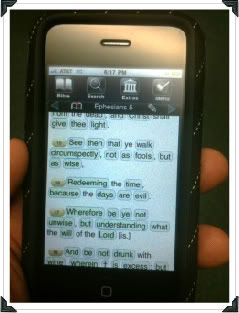
Ephesians 5:15-16, “See then that ye walk circumspectly, not as fools, but as wise, redeeming the time, because the days are evil.”

It is healthy for a soul to want to do more for God and to be in a perpetual state of personal improvement and spiritual maturity.  There are 168 hours in a week, and if you tithe your time to God as you do your monetary increase then that leaves you with nearly 17 hours a week that you can dedicate solely to God.

Assuming you are faithful in your church attendance, an average service is 2 hours, then you have 11 hours left to invest in your relationship with God in a week, and the real question becomes: "What do you do with these 11 hours of great Spiritual potential?"  Consider these suggestions:


1.      Pray.  You don't have to start out praying an hour a day, but whatever time you invest in prayer will bring results.  Prayer is essential to growing in the Lord.  Learn to intercede, but don't let intercession overwhelm you and rob you of joy.


2.      Read.  Read the Word of God.  Some people spend so much time studying and chasing down rabbit tracks in the Bible that they fail to simply read the Bible.  Pray, clear your mind, then read.  Let His written Word be as food to your spirit and absorb it. Remember: The greatest and final source of self-examination is the Word of God.


3.      Study.  This is the time to follow those rabbit trails. This is the time to look into the deeper meaning of the Scriptures. This is the time to search the Scriptures.


4.      Listen.  Invest time in active listening.  Many people talk to God in prayer, but ignore the richest half of prayer time -- listening to what Jesus is saying to them.  He hears your prayer, but do you hear His?  Prayer is dialogue, not monologue.


5.      Fast.  You want to draw closer to God? Fast one day a week, one meal a day, or three days (typically, 3 days is what it takes to crucify the flesh). You can also fast by setting aside time spent on things that you enjoy (other than food), like the Internet, movies, Starbucks, chocolate, etc.


6.      Praise.  There needs to be some time in your week, or day, where you loudly and demonstratively praise God.  Dance before Him in secret prayer; sing in the Holy Ghost loudly as you're sweeping the carpet; let tears of praise flow. We praise God for what He's done. Shout! Clap! Jump! Sing! Extol!


7.     Worship.  Worship is different than praise.  Study the difference and then apply it to your life.  We worship God for who He is. Lie prostrate before God.


8.      Obey.  Whatever God tells you to do in His Word, in prayer, or by His messengers (Pastor, preachers, teachers...) do!  Remember: God will never ask/tell you to do something that violates His written Word.

Of course, there will be days when you feel like you’ve been with God all day, and others when He seems to be unavailable, but every day is full of potential investment opportunities in your relationship with your Lord and Savior Jesus Christ as you tithe your time to Him.

04 January 2011

2011: Advance

Happy New Year!  I trust you had a great holiday.  I enjoyed time with my family and some friends.  Most of all, I enjoyed some time with God and was able to hear from Him regarding this new year.

I believe that 2011 will be a year in which the Apostolic Church will Advance.  I think we will make great strides in all areas.

As I was praying the other day about what 2011 would be like the Holy Ghost seemed to speak one word to me, "Advance."  Along with that word, I also read a powerful verse that I believe goes with it: "Then Isaac sowed in that land, and received in the same year an hundredfold: and the LORD blessed him. And the man waxed great, and went forward, and grew until he became very great: For he had possession of flocks, and possession of herds, and great store of servants: and the Philistines envied him."

Let's sow into this new year and allow God to bless us -- perhaps even an hunderdfold. "Impossible," you might be thinking, but if God could do it in the natural for Isaac then He can do it for us in the natural and in the spiritual as make great strides for God and move forward into this year.  We don't need to wait until next year, but we can advance today, tomorrow, next week, next month, and see a great time of growth and harvest.
There can be so many ways that we move forward, but of primary interest to me today is that of the souls we need to reach.  I believe a great harvest of souls is in our future for 2011. Take time each day to sow the Word of God into the lives of people and watch as God blesses that Word, your effort, and this year.

11 November 2010

Greene's Break Time Question of the Day: 002


Greene answers the question,"What is the importance of God’s timing in the believer’s life?"

30 August 2010

While You're Waiting

I was going about my daily activity recently when this thought entered my mind: “while you are waiting, God is shaping your life.” I believe that this was God's way of speaking to me in that moment. So, bear with me as I try to convey this idea in a clear and concise manner.

Joseph was an immature younger brother and it's possible that he was also a spoiled son doted upon by his father. He had a dream, but he was not ready to receive the fruition of that dream. So, God, in His great wisdom, allowed the 17 year old to be put into precarious situations and he did not see his father until he was 41 years old, at which time his dreams were fully realized. Each trial in Joseph’s life added responsibility and served to increase Joe’s maturity and integrity preparing him for the role he was to play in his dream.

Just as Joseph was not ready, we sometimes find that while we are impatient for fulfillment, we are not quite ready for what God has promised us, or given us in dreams and visions. Therefore, while we are waiting, God is shaping and preparing us to receive the fullness of His promise.

Instead of becoming impatient, we need to learn how to let God shape us. All too often, we can get in the way of God’s plan by allowing the flesh to rise up and prolong the shaping that God’s hand is doing on our inner man as the Great Potter molds us into a vessel that He can use, and if we’re not awfully careful, we can get in the way of the Master’s preparation.

Joseph is a great example to us of one who suffered for his dream, but we read in no passage where he complained or charged God foolishly. In fact, the Word of God indicates twice God’s continued presence even in circumstances where the carnal mind would doubt His proximity (Genesis 39:2 & 21 “…the LORD was with Joseph…”), but Joseph teaches us a principle that will serve us well when our ambition collides with God’s timing.

I admonish you today to trust God in your time of preparation and allow the maturing process to complete its cycle because while you're waiting, God is shaping your life.

05 June 2010

Jesus Christ: Sonship


The Purpose of Sonship

God has always desired to fellowship with man, but sin came into the human family and separated God from man. The purpose of Sonship was so that God could provide the best means by which He and man could regain their fellowship, and to give dominion over the earth to man again. This fellowship is the result of the sacrifice of the Savior on Calvary. He could only do this by providing complete redemption for mankind. He is the Lamb that was slain from the foundation of the world, Rev. 13:8. In short, the Sonship is about God and man engaging in a loving and healthy relationship that is void of any hindrances (sin), which would separate each from the other. For that to take place a Mediator (the Son) had to provide reconciliation between God and man. This Mediator was realized in the person of Jesus Christ.

Who Fulfilled the Sonship


Jesus Christ fulfills the Sonship. In Colossians 2:9 we are told that in Jesus dwells all the fullness of the Godhead (all the characteristics of God) bodily, and we (the Church) are complete in Him (Jesus). Paul did say that the Gospel message was a mystery, but then he went on to explain what the mystery was: "And without controversy great is the mystery of godliness: God was manifest in the flesh, justified in the Spirit, seen of angels, preached unto the Gentiles, believed on in the world, received up into glory” (I Timothy 3:16). Only Jesus Christ fulfills these six points. Thus proving the adage, “Jesus Christ of the New Testament is Jehovah of the Old Testament.”